
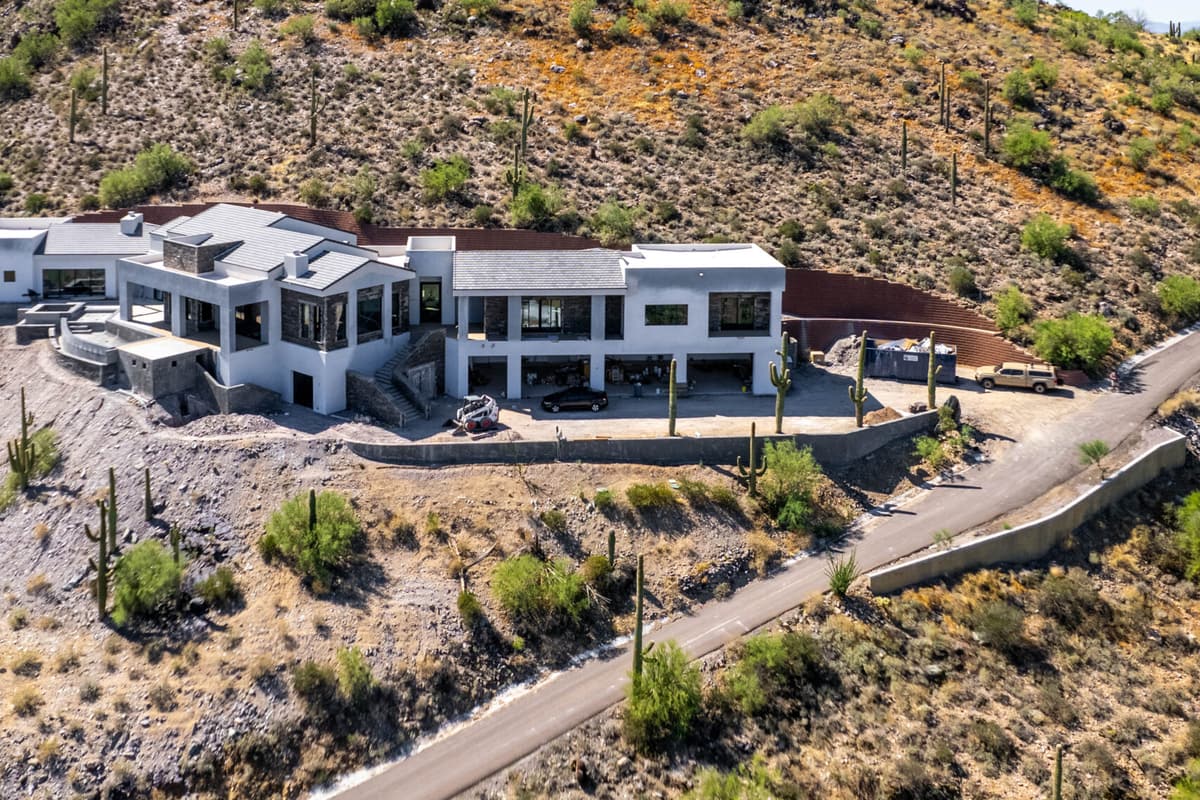
Retaining and Block Wall Contractor in Scottsdale, AZ
Walls that hold the slope and move the water. We build block and concrete walls on hillside lots and in backyards, repair walls that are leaning or cracking, and build structural walls for contractors.
Request a Bid
Tell us about your project and timeline. Our team will follow up within 24 hours to review scope and next steps.
Walls That Hold the Slope and Move the Water
A wall fails here in one of two ways: the ground under it moves, or water stacks up behind it with nowhere to go. We build for both, on hillside lots in north Scottsdale and on flat backyards where a two foot grade change decides whether you get a usable patio or a mud line on your stucco.
What We Do
- Block retaining walls (CMU, segmental)
- Concrete retaining walls
- Tiered and terraced walls
- Drainage and backfill systems
- Wall repair and reconstruction
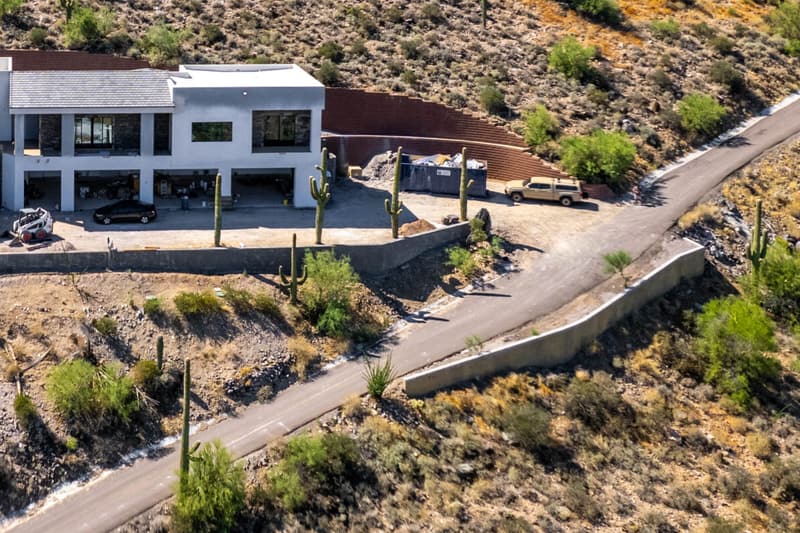
Who We Serve
Homeowners on hillside and sloped lots, and contractors and developers who need a structural wall built to plan. Same crew either way.
Service Area
Scottsdale, AZ and surrounding areas. Residential and commercial retaining wall projects.
Poorly Built Retaining Walls Lead to Failure
Cutting corners on retaining walls leads to structural failure, property damage, and liability. The desert soil in Scottsdale shifts and expands. Retaining walls must be engineered for load, drainage, and soil movement, not just installed. Diamond West Civil builds walls that perform for the long term.
What Scottsdale Asks For Before a Wall Goes Up
The city is direct about this, and it surprises most homeowners. These are the city's own rules, not our policy.
Every retaining wall needs engineered plans
Scottsdale's walls and fences page says it in one line: constructing a retaining wall requires a permit, and all retaining walls require engineered plans submitted to and approved by the city. There is no height where that stops being true. We handle the wall; the plans come from a registered engineer, and we build to what is approved.
Three feet is the line for a fence or garden wall
In most residential zoning districts you do not need a permit for a wall or fence up to three feet. Above three feet, a permit is required, and dry stack stone or interlocking block over thirty inches needs one too. A low decorative wall and a permitted wall can look identical from the street and be a very different job.
Height on your parcel is a zoning question
How tall a wall can be on the property line, inside a required yard, or behind a setback is set by the Zoning Ordinance, Section 7.104, and it changes with the district your parcel sits in. Worth checking before you fall in love with a height. The city's walls and fences page is the starting point.
HOA and neighbors are their own approval
City approval is not HOA approval, and a shared wall on a property line is a conversation with the neighbor before it is a job. We would rather find that out at the estimate than on the morning the crew shows up with a saw and a mixer.
Why Walls Fail Here
Almost every wall we are called to look at failed for one of these four reasons. None of them are about the block.
Water with nowhere to go
Behind a wall, drained rock and weep holes or a drain line carry water out. Without them, a wall built to hold soil also gets water pressure on top of that load, and water is heavy. That is what pushes a wall out at the middle or tips it forward at the top, usually in the first monsoon after it was built.
A footing on ground that moves
The Arizona Geological Survey puts it plainly: damage to structures in Arizona is commonly related to soil characteristics, with expansive soils that swell and shrink and collapsing soils that settle when they get wet causing most of the problems. A footing poured on uncompacted fill, or on soil nobody tested, moves with it. See the state's problem soils page.
Built for looks, not for load
A garden wall stacked for appearance is not a retaining wall. The moment it holds back soil it carries lateral earth pressure, and that load belongs in the design, in the footing, and in the reinforcing. Plenty of walls in the Valley are three courses of block doing a structural job they were never built for.
Whatever sits above it
A driveway, a pool, a parking area, or a second wall above the first is a surcharge. It changes the load and it is the most common reason a short wall still needs an engineer and a permit. If you are planning to put something up there later, tell us now. It is cheap to design for and expensive to add.
Leaning, Cracked, or Bulging?
Before we quote a repair we look for what actually moved: whether the cracks step with the block courses or run straight, whether the wall leans at the top or bulges in the middle, whether the ground at the base stays wet or stained after rain, and whether anything was added above the wall since it was built. Some walls can be drained, tied back, and saved. Others cost less to take down and rebuild on a proper footing. You will hear which one you have before you spend money on the wrong fix.
How We Work
Project Review
Send us your plans. We'll review scope, specs, and site conditions.
Site Evaluation
We walk the site, identify challenges, and confirm the approach.
Detailed Bid
You get a clear, line-item estimate with no hidden costs and no surprises.
Execution
We mobilize, execute, and deliver on time and to spec.

Who You'll Work With
Nick Hammond, owner
U.S. military veteran, in Arizona construction since 2005. Nick oversaw more than $100 million in U.S. State Department construction overseas before founding Diamond West Construction in 2021. He is the qualifying party on Diamond West Civil's Arizona contractor license, ROC #365816.
Diamond West Civil handles the site work: excavation, grading, and retaining walls. Our sister company, Diamond West Construction, builds custom homes and commercial projects.
Need a Retaining Wall Built Right?
Request a bid for your retaining wall project from Scottsdale's experienced contractor.
Submit Project DetailsFrequently Asked Questions
For a retaining wall, yes, and the city also requires engineered plans for it. For a fence or garden wall, most residential districts allow up to three feet without a permit, and anything taller needs one. Dry stack stone or interlocking block over thirty inches needs a permit as well. How tall your wall can be is a separate zoning question tied to your parcel.
We build CMU block walls, segmental retaining walls, poured concrete walls, and tiered/terraced wall systems.
In Scottsdale, yes. The city states that all retaining walls require engineered plans submitted to and approved by the city, with no height cutoff. We work with registered engineers and build to the approved plan.
Most residential retaining walls take 1-2 weeks. Commercial projects vary based on size, height, and complexity.
Yes. Proper drainage and backfill are critical to wall performance. We install drainage systems as part of every retaining wall project.
Yes. Send us your project details and we'll provide a detailed estimate at no cost. Diamond West Civil is fully licensed, bonded, and insured in the state of Arizona.